The Conquest of Gaul
December 28, 2006
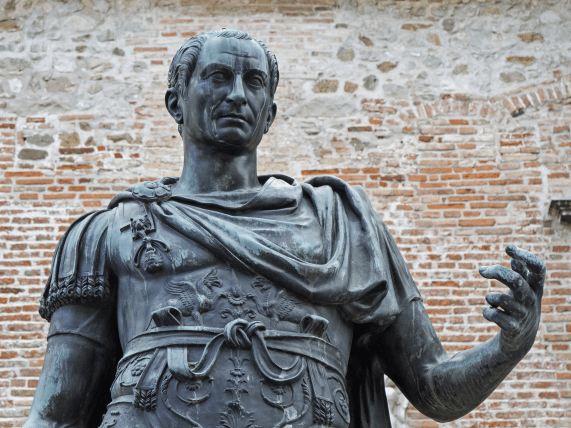
Another review has been completed for our Roman Books section, thanks to community member Ursus.
History should not be so facile, nor literature so digestible. The assumption for generations has been that both disciplines are complicated subjects which legions of trained academics prod and poke, uncovering heretofore undiscovered truths. Theories are spun, papers published, and debates hashed out concerning the significance of the tiniest arcane details. Emanating from historical literature is a dire aura of esoteric majesty in which only the chosen few may brave such climes. Why then does it seem like a half-literate adolescent could, upon reading Caesar, not only enjoy it, but understand it as well...?
...read the full review of The Conquest of Gaul by Gaius Julius Caesar
Mauritius Tiberius
December 20, 2006
This article was brought to us by forum member Tobias
At the time of the birth of Mauritius Tiberius (known as Maurice to us), the Later Roman Empire was undergoing the far-reaching advances of Justinian’s reign. Born in Roman territory in Cappadocia (In modern-day Turkey), little is known of his childhood years. Joining the Byzantine military, he rose high in rank as an officer until he was so prominent as to be appointed the Emperor Tiberius II Constantine’s successor. Justinian had been barely cold in his grave before his rebuilt Empire began to disintegrate...
...continue with the article on Mauritius Tiberius
Rome’s Gothic Wars by Michael Kulikowsky
December 15, 2006
At some point in the third-century a hitherto unknown group of people appeared around Rome's Danube frontier. These people would come to be known as the Goths. They began their history during one of Rome’s darkest periods as one of many but grew to become an entity of their own. In 378 they destroyed the larger part of the imperial eastern Roman army at Adrianople and an emperor with it. By 410 their relations with the Empire culminated with the capture and sack of Rome under their leader Alaric and eventual settlement as the first autonomous barbarian kingdom within the Roman Empire. This is period and people of study in Michael Kulikowsky’s book Rome’s Gothic Wars....
Rome's Gothic Wars
The Gladiator Emperor
December 13, 2006
The Gladiator Emperor
Commodus’ association with the god Hercules was never more apparent than with his exploits in the arena. In order to perpetuate his image as a living god to the Roman people, Commodus not only began to attire himself in the same manner as the mythical hero (lions skins and carrying a club), but he used the arena to show his physical prowess, therefore proving his direct association with the god. Commodus became Hercules for all intensive purposes, not only in identification with the great heroic icon, but as the symbolic protector of Rome and the empire. This identification was not just a symptom of his megalomania, but was certainly a key factor resulting in his eventual assassination as Commodus continued to challenge and disrupt Roman institutions and traditions...
December Book Giveaway
December 06, 2006
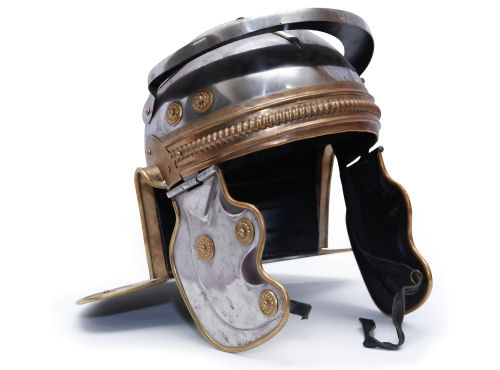
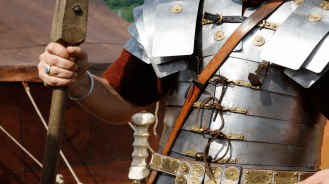
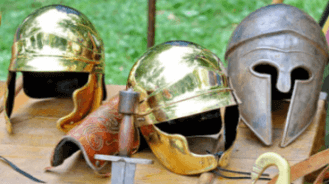
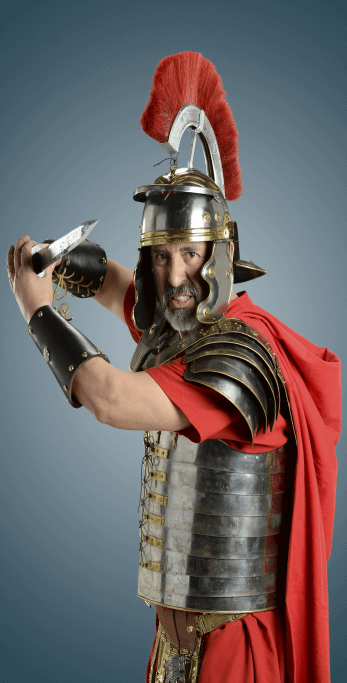
We are happy to announce a December book give away in association with ArmorVenue just in time for the holiday season.
Eight prizes will be awarded to active participants of the UNRV forum including choices of several pre-selected Roman books, 1 of 2 Roman Empire Wallmaps and a special choice for first prize.
Participation is very simple. A random draw from among all entries (1 per participant) will take place after approximately 1 week and winners announced shortly thereafter. Entries will consist of emailing your notice of participation to a selected address defined (along with participation rules) within the link provided below.
Giveaway Entry Rules and Prize Details
Again, we'd like to thank ArmorVenue for their generous sponsorship. Armor Venue is a seller of authentic Roman armor and weapon replicas.