

The below were festivals where religious officials employed by the State conducted public rites.
Citizens were required to suspend business on such dates, but they were not required to attend religious ceremonies (many did so, however, as sacrificial meat was often given in such festivals).
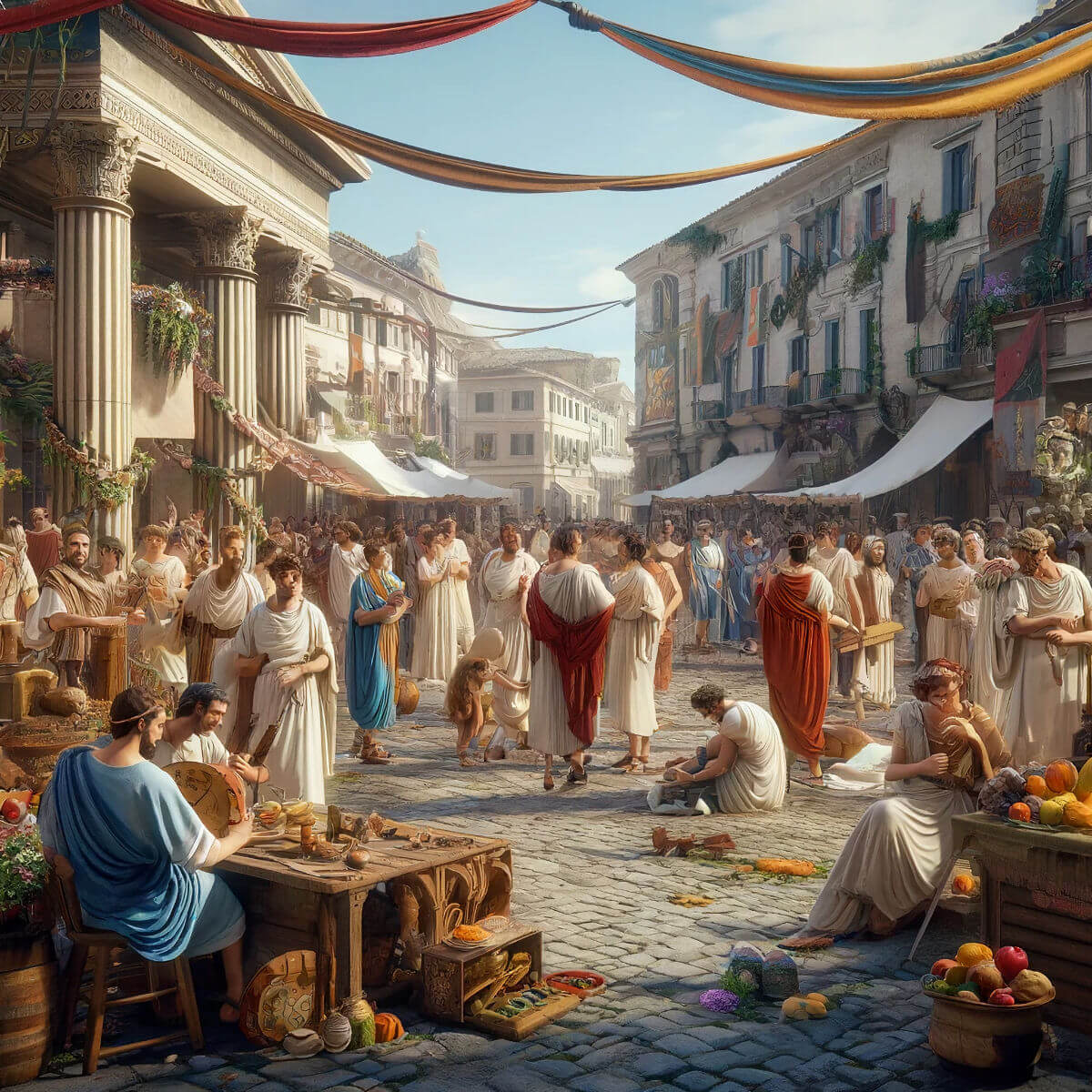
Because the ancient Romans did not observe a "weekend" as we do today, these festivals would have constituted the days of rest for the populace.
By the late Republic, many of the ancient festivals listed below had fallen into disuse, with the meaning of the festival and/or the deitiy to whom it was dedicated obscured.
January
1. Festival of Janus, the two faced god of beginnings. Exchanging of lamps to furnish light for the coming year.
3-5. Compitalia. Observance day could be moved by order of the praetor urbanis. Celebrated the lares, or local guardian spirits, of the crossroads. Shrines were set up where crossroads met. Marked the end of the agricultural year.
5. Birthday of the shrine of Vica Pota, ancient goddess of victory.
9. Agonalia. Sacrifice of ram by rex sacrorum to uncertain god, possibly Janus.
11. Juturnalia. Festival of Juturna, river nymph and goddess of healing.
15. Carmentalia. Festival to honor Carementis, river nymph and goddess of prophecy.
24-26. Sementivae. Offerings to Tellus and Cerus (agricultural goddesses) to protect the spring sowing.
27. Festival of Castor and Pollux, Greek demigods who were patrons of cavalry, athletes and sailors.
February
1. Festival of Juno Sospita.
5-17. Fornacalia. Celebration of grain ovens.
13. Festival to honor Faunus the rustic god.
13-21. Parentalia. Private and public ceremonies for the spirits of the familial dead. The 21st was the Feralia, when food was carried to tombs of the dead.
15. Lupercalia. Purification and fertility festival. Romans not certain to which god holiday was dedicated. Citizens gathered before the cave where Romulus and Remus were suckled by the she-wolf. A goat and dog was sacrificed. Two noble youths were smeared with the blood and ran through the streets. They whipped passers-by with strips of goat skin, imparting fertility.
17. Quirinalia. Festival of the ancient god Quirinius, a sabine war god.
22. Carista. Renewal of family ties, offerings to familial lares.
23. Terminalia. Honoring the boundary god Terminus.
25. Regifugium. Celebrated in honor of expulsion of the last king and founding of the Roman Republic.
27. Equirria. Horse racing in honor of Mars.
March
1. Festival of Mars.
7. Festival of Vediovis, an underworld version of Jupiter.
9. Sacred shield of Mars carried by his priests, the salii.
14. Equirria. Another horse racing festival to Mars. Also the Mamuralia, which was a seperate festival in honor of the sacred shields of Mars.
15. Festival to Anna Perenna, goddess of the new year.
17. Liberalia, festival to Liber Pater, a god sometimes identified with the Greek Bacchus.
19. Quinquatra. Five day festival in honor of Mars and Minerva. On 23 March the trumpets of Mars were purified.
31. Festival of Luna, goddess of the moon.
April
1. Veneralia,festival of Venus Verticordia.
4-10. Megalesia. Games held in honor of Cybele, the Phyrgian mother earth goddess whose cult was brought to Rome during the 2nd Punic War.
5. Festival of Fortuna Publica, "luck of the people."
12-19. Ceriala. In honor of Ceres.
13. Festival to Jupiter of Victory and Jupiter of Liberty.
15. Fordicida. Pregnant cow sacrificed to Tellus to promote fertility.
21. Parilia. Purification of sheep for fertility.
23. Vinalia Priora. Festival of wine production in honor of Jupiter.
25. Robigalia. Rust colored dog sacrificed to appease the god of grain rust.
28 April - 3 May. Floralia. Flower festival connected with Spring fertility.
May
1. Festival of Lares.
9. Lemuria. Festival to appease the spirits of the wandering household dead.
11. Sacrifice to Mania, a goddess of death.
14. Festival to Mars Invictus.
15. Festival to Jupiter and Mercury.
21. Agonalia. Sacrifice of ram by rex sacrorum to uncertain god, possibly Janus.
23. Festival to Vulcan.
25. Festival to Fortuna.
29. Ambarvalia. Sacrifices offered to agricultural deities to purify crops.
June
1. Festival of Juno and Mars.
3. Festival of Bellona, the war goddess.
4, Festival of Hercules.
5. Festival of Dius Fidius, Roman god of oaths sometimes identified with Jupiter.
8. Festival of Mens, personification of mental activity.
9. Vestalia, festival of Vesta.
11. Matralia. Festival of Mater Matuta, goddess of growth and childbirth.
13. Festival of Jupiter Invictus.
19. Festival of Minerva.
20. Festival of Summanus, a god of thunderbolts associated with Jupiter.
24. Festival of Fors Fortuna, bringer of providence.
25. Turian games held every four years to underworld gods.
27. Festival to lares and Jupiter.
July
1. Festival of Juno.
5. Poplifugia. Flight of the People. Meaning now lost.
6-13. Games to honor Apollo.
7. Festival of Pales. Juno worshipped on this day in honor of serving women.
17. Festivals of Honos (honor), Virtus (physical and moral excellence) and Victoria (victory).
19. Lucaria. Festival in a sacred grove near the Tiber. Meaning lost.
20. Games held to honor victories of Caesar and goddess Victoria.
22. Festival of Concordia, goddess of concord.
23. Neptunalia. Festival for Neptune.
25. Festival for Furrina, goddess of springs.
30. Festival to Fortuna.
August
1. Festivals of Spes (Hope) and Victoria.
5. festivals of Salus, goddess of health.
9. Festival of Sol, god of the sun.
12. Festival to Hercules and Venus.
13. Festivals to Diana, Hercules, Castor and Pollux.
17. Portunalia. Festival to Portunus, god of doors and harbors. Involved a ritual connected with keys.
19. Vinalia Rustica. Another wine production festival.
21. Festival to Consus , an agricultural god also associated with horses.
23. Festival to Vulcan.
24. Festival to Luna.
25. Festival to Ops, goddess of abundance and partner to Saturn.
27. Festival of Volturnus, an Etruscan river god.
28. Festival of Sol and Luna.
September
1. Festival to Jupiter and Juno.
5. Festival to Jupiter.
5-19. Games for Jupiter Optimus Maximus.
13. Festival of Capitoline Triad (Jupiter, Juno and Minerva).
23. Festival to Apollo.
26. Festival of Venus Genetrix, Venus as mother of Roman people.
October
1. Festival to Fides (fidelity) and Juno.
4. Fast day for Ceres.
7. Festival of Jupiter and Juno.
9. Festival to the public genius, Faunus and Venus.
10. Festival to Juno.
11. Meditrinalia. Another wine festival to Jupiter.
13. Fontinalia. In honor the god of springs.
14. Festival of the Penates, domestic patron gods.
15. Capitoline games in honor of Jupiter.
19. Armilustrium. Festival of purification of arms in honor of Mars.
26 October -1 November. Sulla's Victory Games in honor of Victoria.
November
4-17. Plebian games in honor of Jupiter. The 13th was the great festival day and highpoint of the games.
December
1. Festivals of Neptune and Pietas (Piety).
3. Festival of Bona Dea, the women's goddess. Celebrated only by women and Vestal Virgins in the house of a Consul or Praetor.
5. Festival of Faunus held in countryside.
8. Festival of Tiberinius, personification of Tiber river.
11. Agonalia. Sacrifice of ram by rex sacrorum to uncertain god, possibly Janus.
12. Festival of Consus.
13. Festival of Tellus.
15. 2nd festival to Consus.
17-23. Saturnalia. Merry making festival ot Saturn, the rustic god of seed sowing, later identified with the Greek Chronus. Sacrifice at the temple of Saturn followed by public feast and gift giving. Public gambling allowed. Holiday costumes and caps adorned. Candles lit. Slaves were temporarily absolved of duties. Master may have switched roles with slaves.
18. Festival of Epona, a Gallic horse goddess.
19. Festival to Ops.
21. Festival to honor Diva Angeronae, goddess of secrecy.
22. Festival of the Lares.
23. Larentalia, A funeral festival to an obscure goddess by name of Acca Larentia.
25. Midwinter solstice. Became prominent only in the third century when Aurelian consecrated his temple to Sol Invictus on this date.
Sources:
Did you know...
The 'Saturnalia' was originally celebrated in Ancient Rome for only a day, but it was so popular that soon it lasted a week, despite Augustus' efforts to reduce it to three days.