

Wine Wasn't Always So Popular Amongst the Romans
Of the many contributions the Romans made to the world - both ancient and of those passed on to modern society - perhaps the most lasting was the art of wine (vinum) making.
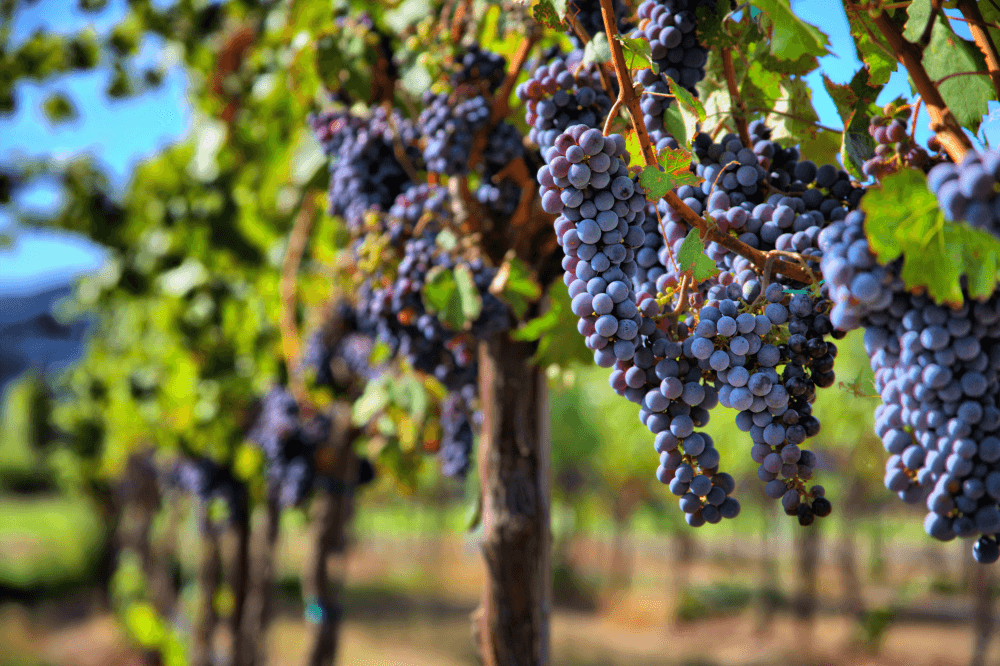
Wild grapes, though now nearly extinct, grew in abundance throughout the Mediterranean and were cultivated in earnest throughout the region.
The Etruscans and Greeks were the preeminent wine consumers in Italy prior to the rise of Rome, and though wine was an important part of the Roman diet, it didn't become the cultural icon of their society from the very start.
The Carthaginians who dominated Mediterranean trade prior to the Romans were the wine connoisseurs of the time, and the earliest ancient references prior to Latin was provided in the Punic language.
Expansion of the Empire Allowed Vineyards to be Established in Italy
As Rome expanded, and eventually defeated Carthage in the mid 2nd century BC, Roman vineyards began to spring up in earnest throughout Italy.
No longer overwhelmingly dedicated to the art of warfare in Italy, local farms were able to flourish. The wild grapes that once formed the basic wine culture of Italy were cultivated and farmed in abundance.
Prior to this, Italy was an agrarian culture based predominantly on sustenance farming, but as expansion into fertile lands such as Sicily and Africa occurred, the door was opened to other agrarian pursuits.
Wine and grape production in Italy soared in the 2nd century BC, and large slave run vineyards dotted the coastlines.
Wine production so replaced that of traditional food farming, that the Emperor Domitian was forced to destroy several vineyards in 92 AD, while putting a ban in place on the growth of new vines.
Vineyards and Wine Production Become Established in Roman Culture
Several ancient authors dedicated lengthy documentation on the production, economics and cultural value of wine.
Cato the Elder provided the first Latin work involving Roman wine, among other agricultural pursuits, 'De Agri Cultura'. Varro provided a rather cursory review of wine production in a greater work on overall farming in 'Res Rusticae' (Country Matters).
Perhaps the best example of all Roman sources on wine production comes from one of the least known Latin sources. Columella, in his own 'De Re Rusticae' (On Country Matters), provided a highly detailed look at the Roman art of grape growing, wine production and consumption.
Pliny the Elder, adding in his own great work, Historia Naturalis, that wine production in Italy by the mid 2nd century BC surpassed any other place in the world.
The cultivation of wine and grapes was disallowed, at least by Roman farmers outside of Italy during this period, and wine became a great export commodity.
While it would remain a treasured piece of Roman daily life, its export value would diminish as the Empire expanded. As Gaul and Hispania (essentially France and Spain) came under Roman influence, massive vineyards were established in these provinces, and Italy would eventually become a major import center for provincial wines.
Wine Becomes a Drink for Any Time or Occasion
The Romans drank wine as a staple part of their diet, preferred over anything else.
In fact, the quality of drinking water was such that wine was a typical drink at any time in the day.
However, unlike today, ancient wine was almost always consumed mixed in with large percentages of water. The ancient wines were stronger, both in alcohol content and perhaps in flavor, making the watering down of their drinks necessary.
In so doing, not only was the longevity of a serving secured, but the alcoholic effects also slowed.
They enjoyed wines of many varieties and flavors, and mixed the original grape product with an exhaustive list of flavor changing properties.
Wine Flavoring
From honey to salt water, herbs and/or spices of all sorts, the Romans seemed willing to try anything. Even chalk was added to reduce acidity.
The flavor of the wine was also altered through its storage method. The typical method of storage was in the classic Roman amphorae (a handled jug with a cylindrical container area, and small long neck and spout).
In these, they might coat the inside with resin, not only for preservation, but to affect the taste of the final product.
The boiling procedures, too, affected the taste, and the Romans were well aware of the various taste properties gained by using lead, iron, copper, etc. cooking pots.
How Was Roman Wine Produced?
Wine production varied, of course, depending on the quality of the product intended.
For any wines, grapes were gathered and trodden with feet, but generally sent to a press for further refinement. The Torculum or the Roman press could sometimes be a sophisticated piece of machine driven parts, but was most commonly a heavy wooden beam.
The juices were strained generally through a colander like object called a colum to separate any thick skins or other undesirable objects.
To ferment, the juices were poured into amphorae or similar pots called dolia, under varying conditions. Some amphorae were buried in sand, others in dirt, and some were allowed to rest in bodies of water.
Some juices were boiled before being poured into amphorae for fermentation.
High quality vintage wines could be left for considerable lengths of times in this storage process. Though the required length of time seems to have been anywhere from nine days to a couple of months, depending on the desired final product, vintage wines were preferred to be aged anywhere from 10 to 25 years.
In fact, the Emperor Caligula was once presented with a 160 year old vintage that was considered a supreme treat.
Unfortunately, as the Roman Empire began to collapse, both vineyards and the wine industry as a whole fell into a similar state during the so called "Dark Ages". Though wine production continued, it didn't regain its immense popularity until the resurgence of classical culture in the European Renaissance.
Types of Ancient Wines
Some General Wines
Mustum
A low quality grape juice, mixed with vinegar and drank fresh after pressing.
Mulsum
A common class wine, generally sweetened with honey and served to Plebes and the lower classes at public events.
Lora (Vinum Operarium)
A bitter wine made from the grape skin husks, seeds and any other product left over from the pressing process.
Fermented by soaking in water, it was generally served to slaves, though some lower classes, and even soldiers may have had access to wines that were hardly any better. Varro, however claimed that it was the drink of old women.
Today, these excess grape products are used in distilling the liquor Grappa.
Posca
A sour vinegar like wine (acetum) mixed with water to reduce the bitterness and generally available to soldiers and lower classes.
Click here to read more about posca in ancient RomeVinum Praeliganeum
Manufactured from inferior and half-ripe fruit gathered before the regular harvest period. Perhaps also used in the production of ciders and similar drinks.
Vinum Dulce
A sweet wholesome wine, made from dried grapes that were pressed in the heat of the day.
Vinum Diachytum
Similar to vinum dulce but grapes were allowed to dry in the sun for longer periods of time. The wine was described as more 'luscious' than the vinum dulce.
Passum
Raisin wine. Obviously made from nearly completely dried grapes. It's most prized variety was imported from Crete.
Vinum Marrubii, Scillites, Absinthiates, Myrtites
Example of wines used for medicinal purposes. Marrubii for coughs, Scillites for digestion and as a tonic, Absinthiates roughly corresponding to modern Vermouth and Myrtites as a general medicine aiding many ailments.
Some Specific Wines
Vinum Pramnian
A Greek wine that was considered harsh, astringent and remarkably strong.
Chian
Perhaps the most prized Greek wine, with the best variety coming from Ariusium.
Lesbian
A Greek wine hailing from the island of Lesbos, and Mytilene in particular. It was considered light, wholesome and had a natural taste of salt water.
Setinum
An strong, sweet Italian wine of Latium considered perhaps the best of wines. It was the favored wine of Augustus hailing from the hills of Setia.
However, Setinum seems to have fallen into disfavor and became nearly extinct due to miscultivation and the canal of Nero that was dug out directly in this grape's natural habitat.
Caecuban
Another sweet wine of Latium. Before the imperial period, this seems to have been the most prized grape variety. This grape too seems to have suffered under Nero's canal.
Rhaetic
A sweet wine made from grapes grown in the Alps, especially prized from near Verona, Italy. Suetonius claims that this wine, and not Setinum was actually the favorite of Augustus.
Falernian
A highly prized wine, available mainly to the upper classes. It was made from the Aminean grape originating near Naples, but transfered to Mt. Falernus between Latium and Campania. These vines grew best around elm trees.
It produced a full-bodied drink that was best when aged between 10 and 20 years, and had a near yeast killing alcohol content of up to 16%.
Alban
A preferred wine among the upper classes, it provided several varieties of flavors including very sweet, sweetish, rough, and sharp. It was considered perfect if kept for 15 years.
Surrentine
Hailing from the bay of Naples, this mid class wine was considered lacking in richness and very dry. It was best when kept between 5 and 20 years.
The Emperor Tiberius referred to it as nothing more than generous vinegar. His successor, Caligula, called it nobilis vappa, indicated it being known as worthless. Of course, these men had tastes for higher qualities, so their reaction can be understood.
Massic
Another product of Naples vines. It was considered a harsh wine.
Gauranian
From the ridge above Baiae and Puteoli, produced in small quantity, but of very high quality, full bodied.
Calenian
Hailing from Cales, Calenum was a large grape and its wine, according to Pliny, was better for the stomach than Falernian.
Fundanian
Again, Pliny suggests that this wine was full bodied and nourishing, but apt to attack both stomach and head; therefore little sought after at banquets.
Mamertine or Messanic
This wine hailed from Sicily and was made fashionable by Julius Caesar. He served it often as his various public events and triumphs. The finest of this type was called Potalanum.
Baeterrae
A Gallic (or later French) wine that was considered acceptable to the Romans. It's grape was cultivated in the south, or Narbonensis.
Balearic, Tarraco and Lauron
Three wines of Hispania (and the Balearic isles, obviously) that were considered worthy imports.
Laletani
Another wine of Hispania, that was famed not so much for quality, but for the massive quantity in which it was produced.
Mareoticum
An Egyptian grape originating near Alexandria. It was said to be white, sweet, fragrant and light.
Chalybonium
An eastern wine, whose finest product seems to have come from near Damascus, Syria.
Taenioticum
Named from a long narrow sandy ridge near the western extremity of the Nile Delta. It was aromatic, slightly astringent, and of an oily consistency, which disappeared when it was mixed with water.
Did you know...
Wine is mentioned as far back as 2,750 BC but existence of wine goes further - now dated at 5,400 BC.