

For more than a millennium, the Roman military shaped the history of the Mediterranean world. Yet the conquests, frontier defenses, and internal stability of the empire were not sustained by soldiers alone. When their military service ended - typically after twenty to twenty-five arduous years - Roman legionaries and auxiliary troops entered a new phase of life as Roman veterans.
Their transition back into civilian status was not simply a personal milestone; it was a structural pillar of Roman statecraft. Many were settled in colonies across the empire, forming communities that served political, strategic, and economic purposes far beyond the individuals themselves.
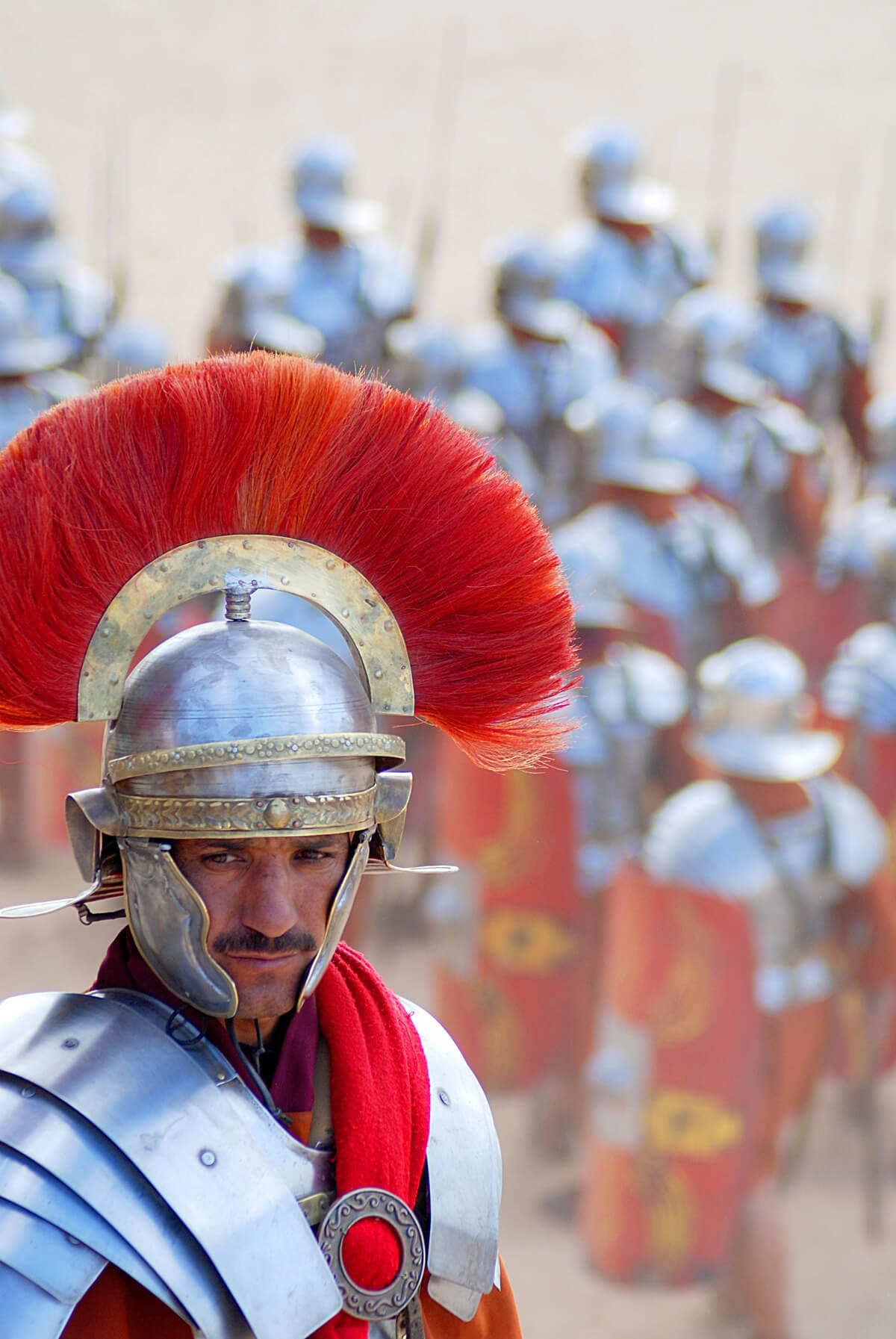
Veterans and Roman colonies are inseparable elements of the Roman imperial system. Colonies became the staging posts of Romanization, bastions of loyal citizenship, engines of urban growth, and symbols of the rewards Rome could bestow. Veterans became landholders, local elites, security forces, political actors, and carriers of Roman identity into far-flung regions.
The Veteran’s Journey: From Soldier to Settler
Before exploring colonies themselves, it is essential to understand what becoming a veteran meant. A soldier’s service was long, demanding, and often brutal. Legionaries served an official term of twenty years (extended to twenty-five in the early Empire), while auxiliaries served roughly the same or slightly longer. Many faced years campaigning on foreign soil, months spent building roads, bridges, and fortifications, and long stretches of monotonous garrison duty.
At the end of this service stood the honesta missio, the honourable discharge. It was marked by a formal ceremony, the granting of proof of service, and the award of whatever benefits the state had promised—land, cash, citizenship, exemption from certain civic duties, and the right to marry legally.
While some veterans returned home, Rome encouraged or compelled many to settle in designated colonies. This was not accidental. Veterans were ideal colonists: disciplined, accustomed to hardship, loyal to the state, and deeply invested in Rome’s stability. Their presence helped secure newly conquered territories, urbanize the provinces, and reward military loyalty.
Veterans and Colonisation in the Republic
The First Veteran Settlements
Colonization was not initially a system created for veterans, though they were involved from early on. In the 4th and 3rd centuries BC, Rome founded coloniae along the Italian peninsula to secure conquered territory and protect key roads and coastal points. These early colonies were often mixed communities of Roman citizens and Latins, with small numbers of discharged soldiers among them.
By the 2nd century BC, however, as Rome’s overseas commitments increased, land pressures in Italy grew and veterans became a more formal part of colonization policies. Expansionist commanders saw the settlement of their former soldiers as both a practical necessity and a political tool.
The Gracchi and the Social Crisis
Land reform attempts by Tiberius and Gaius Gracchus in the late 2nd century BC highlighted the problem of dispossessed veterans. Many citizen soldiers returned from long campaigns to find their farms destroyed by neglect or sold off by creditors. The Gracchi proposed distributing public land to the poor - including veterans - to stabilize Roman society and reduce tensions between the rich and poor.
Although the reforms were controversial and only partly successful, they revealed a key truth: Rome needed a stable system of veteran resettlement. This problem would soon define the late Republic.
Veteran Colonies Under Marius and Sulla
Gaius Marius, the reformer of the Roman army, relied heavily on volunteers from the landless poor. To secure their loyalty, he advocated for land settlements upon discharge. His political rival Sulla went even further. After his victory in the civil war (82 BC), Sulla confiscated enormous tracts of land in Italy and founded more than twenty veteran colonies. These acted both as rewards for his troops and as garrisons of political support.
This broader setting is important for understanding how Gaius Marius changed the Roman army, by way of broader recruitment, tougher campaigning practices, logistical reforms, veteran expectations, and a closer bond between soldiers and commanders.
The consequences were profound:
- Veteran settlements increased Romanisation within Italy.
- Large numbers of loyal settlers altered local political dynamics.
- The precedent of using colonies for political power became firmly established.
Julius Caesar and Augustus would develop this system on a far greater scale.
Caesar, Augustus, and the Institutionalization of Veteran Colonies
Caesar’s Ambitious Settlement Plan
Julius Caesar recognised the importance of veteran settlement for both political stability and imperial expansion. After his Gallic campaigns and civil war, he promised his soldiers generous land grants. Caesar founded colonies across Italy, Gaul, Spain, and North Africa, including notable sites such as Arles (Arelate) and Corinth (refounded as a Roman colony). Many were strategically positioned along trade routes and newly conquered frontiers.
Caesar's assassination in 44 BC left many projects unfinished, but the principle was clear: veteran colonies were instruments of state-building.
Augustus: Architect of the Veteran Colony System
Augustus, the first Roman emperor, turned ad-hoc practices into a coherent imperial policy. With hundreds of thousands of soldiers to discharge after decades of civil wars, he faced a logistical and political challenge. His solution shaped the empire for centuries:
- He founded or re-founded dozens of colonies across the provinces.
- Veterans were settled in Italy, Spain, Gaul, North Africa, the Balkans, and the East.
- Where land was scarce, he paid veterans in cash instead of confiscating property, preserving social stability in Italy.
Augustus used colonies to secure frontiers, encourage urban growth, and spread Roman culture. Cities such as Emerita Augusta (Mérida), Philippi, and Augusta Praetoria (Aosta) became major urban centres. Their names make clear their purpose: cities of Augustus’ veterans.
Under his rule, the link between veterans and colonies became a permanent feature of Roman imperial policy.
Life in a Roman Veteran Colony
What did it actually mean to live in a veteran colony? While conditions varied widely depending on region, wealth, and historical period, some general patterns defined these settlements.
Urban Layout and Organisation
Most colonies were established according to Roman urban planning principles:
- A central forum with administrative and religious buildings
- A grid street plan (centuriation) often extending into the countryside
- Defensive walls (particularly for frontier colonies)
- Temples, baths, theatres, and amphitheatres built over time
Veteran colonies became showcases of Roman urbanism. Their physical layout helped Romanize local populations and symbolized the presence of Roman authority.
Land Allotments: Small Farms and Rural Plots
Veterans typically received viritane land allotments (individual plots) ranging from modest farms to larger estates, depending on rank and local availability. A standard plot might be around 10–20 iugera (roughly 6–12 acres), though this varied greatly.
Veterans were not required to farm personally, though; many rented out land or hired local labour.
Citizenship and Legal Privileges
Veteran colonies held elevated legal status. A colonia civium Romanorum was, in essence, a transplanted Roman city, whose inhabitants enjoyed full citizenship rights even if the colony was located across the Mediterranean.
Auxiliary veterans had an additional incentive: upon honourable discharge, they received Roman citizenship for themselves, their children, and often their wives. Their settlement in colonies helped spread citizenship throughout the provinces.
Economic Integration
Veterans brought with them skills learned during military service, including engineering, construction, logistics, administration, and artisanal crafts. Many colonies quickly became centres of:
- Agriculture
- Pottery and metalworking
- Trade and shipping
- Road-building and infrastructure projects
Veterans often formed influential local networks, shaping the economic direction of their regions.
Social and Political Influence
Veterans were not simply passive settlers. Their discipline, experience, and connections frequently propelled them into local leadership roles. Many municipal councils across the empire included ex-centurions or decurions. In frontier zones, veterans often helped police rural areas and ensure local stability.
Their presence also strengthened Roman cultural identity. Latin became more widespread, Roman law more accepted, and local elites increasingly integrated into imperial systems.
The Strategic Role of Veteran Colonies
Colonies were far more than retirement communities. They formed one of the empire’s most important strategic tools.
Securing Frontiers
Veterans provided a semi-militarized population in vulnerable regions. Frontier colonies - such as those along the Rhine, Danube, and in North Africa - acted as buffers and rapid-response forces in emergencies. Their familiarity with military life made them reliable defenders if local unrest or external threats arose.
Romanization and Cultural Integration
As mentioned, veteran colonies were engines of Romanization:
- Veterans spoke Latin and followed Roman customs.
- Their cities adopted Roman architecture, laws, and religious practices.
- Local populations interacted daily with Roman citizens, accelerating cultural integration.
In Gaul and Hispania, especially, the impact of veteran colonies was transformative. Many of the region’s later provincial elites were descendants of veterans or closely linked to them.
Political Stability
Veterans were loyal to the emperor who had rewarded them. Colonies therefore created pockets of political support across the empire. Their presence helped counterbalance rebellious local elites, potential uprisings, or foreign populations resistant to Roman rule.
Infrastructure and Economic Growth
Veterans often played a role in constructing or maintaining roads, bridges, aqueducts, and military installations. Even after formal retirement, many retained specialist skills that benefited their communities.
Colonies thus served as catalysts for regional development - something especially evident in North Africa, where veteran settlements contributed to a long-lasting agricultural boom.
Notable Veteran Colonies Across the Empire
Rome established hundreds of colonies, but several stand out for their historical importance and legacy.
Philippi (Greece)
Philippi became one of the most prominent veteran colonies after the Battle of Philippi (42 BC), where the forces of Octavian and Antony defeated Caesar’s assassins. The victors settled thousands of veterans on confiscated land, transforming the city into a bastion of Roman presence in the Greek-speaking East.
Emerita Augusta (Spain)
Founded by Augustus in 25 BC for veterans of the Legiones V Alaudae and X Gemina, Emerita Augusta (modern-day Mérida) became the capital of Lusitania. Its monumental architecture - bridge, theatre, amphitheatre - still stands today.
Cologne (Germany)
Colonia Claudia Ara Agrippinensium (Cologne) was developed into a major colony under Claudius and served as a key urban centre on the Rhine frontier.
Berytus (Lebanon)
Berytus (Beirut) became a renowned centre of Roman law. Its population of veterans, mostly from Italian legions, shaped the city’s identity for centuries.
Timgad (Algeria)
Perhaps the most textbook example of a Roman colonial city, Timgad was founded by Trajan for veterans of the Legio III Augusta. Its perfect grid layout, triumphal arch, and forum illustrate the Roman colonial model at its height.
Aosta (Italy)
Augusta Praetoria Salassorum was founded by Augustus to secure the Alpine passes. Its walls, gate towers, and street plan remain strikingly preserved.
Changes in the Empire
As the 1st and 2nd centuries AD progressed, the empire’s military and administrative needs changed. Several trends reshaped veteran settlement practices:
Fewer New Colonies in Italy
By the early Empire, most available land in Italy had already been allocated. Wealthier veterans often preferred monetary bonuses over potentially low-quality land.
Increasing Provincial Focus
Colonies were increasingly concentrated in the provinces, especially along frontiers. Veterans were encouraged to integrate into provincial society, and many married local women.
Growing Urbanisation
Veteran settlements gradually became part of broader urban expansion. Some colonies grew into provincial capitals or commercial hubs, while others faded or were absorbed by neighbouring towns.
Legal and Administrative Standardisation
Under emperors such as Hadrian and the Antonines, the state formalized the benefits veterans would receive. Discharge diplomas (bronze documents) were standardized and granted to auxiliary veterans, guaranteeing citizenship for themselves and their families.
The Late Empire: New Realities and the Decline of Traditional Colonies
By the 3rd and 4th centuries AD, the classical model of veteran colonies had begun to fade. This reflected deeper transformations in Roman military and economic structures.
More Mobile Armies, Fewer Large Settlements
Late Roman armies were increasingly composed of mobile field units (comitatenses) and local frontier troops (limitanei). Soldiers often came from the provinces in which they served and returned home after discharge, reducing the need for designated colonies.
Changing Rewards
Land grants persisted, but cash bonuses and tax exemptions became more important. Some veterans were settled on imperial estates or assigned hereditary military roles, especially along vulnerable frontiers.
Administrative and Fiscal Pressure
The crisis of the 3rd century AD and subsequent reforms reduced the state’s capacity to fund large new colonies. Existing colonies often remained important urban centres, but fewer new ones were founded.
Cultural Integration Complete
In many regions, the original purpose of colonies - to Romanize newly conquered peoples - was simply no longer necessary. Roman law, language, and culture already dominated Spain, Gaul, Italy, and North Africa.
Thus, while the institution of the colony did not disappear, it ceased to have its earlier political and military significance.
Veterans as Architects of Empire
The story of veterans and Roman colonies is one of mutual transformation. Veterans shaped the development, identity, and stability of the Roman provinces, while colonies provided veterans with land, status, and a new life after decades of military service. Together, they were a cornerstone of Roman imperial strategy.
Veteran colonies were not merely retirement homes; they were instruments of Romanization, engines of economic development, strategic strongholds, and symbols of the rewards Rome offered its loyal soldiers. Through them, Rome extended the reach of its culture, law, and influence across three continents.
Even today, the legacy of these settlements can be traced in the names, layouts, and cultural heritage of modern cities. The bond between veterans and Roman colonies is therefore not just a historical topic - it is a foundation of the Roman world, one whose effects continue to shape our landscape and historical imagination.
Frequently Asked Questions
How long did Roman soldiers serve before becoming veterans?
Most Roman legionaries served for around twenty to twenty-five years before receiving an honourable discharge (honesta missio). Auxiliary soldiers served comparable terms. Only after completing this long period of service did they qualify for veteran status and the associated rewards.
The wider subject of Roman Military Veterans Returning Home includes retirement, land grants, colonies, pensions, citizenship, family life, and civilian status.
What benefits did Roman veterans receive after discharge?
Veterans could receive a mix of rewards, including land grants in colonies, one-off cash payments, Roman citizenship (for auxiliaries), exemption from certain civic duties and, in many cases, the legal right to marry. These benefits were designed both to reward loyalty and to bind former soldiers to the Roman state.
Why did Rome settle veterans in colonies?
Settling veterans in colonies served several purposes. It rewarded soldiers with land, created loyal communities in strategically important areas, encouraged urban growth and helped spread Roman law, language and culture into newly conquered regions. Veteran colonies acted as both frontier buffers and engines of Romanisation.
Where were Roman veteran colonies located?
Veteran colonies were scattered across the empire. Famous examples include Philippi in Greece, Emerita Augusta in Spain, Timgad in North Africa, Berytus in the eastern Mediterranean and Augusta Praetoria (Aosta) in northern Italy. Many of these settlements grew into important provincial cities.
Did auxiliary soldiers also receive land and citizenship?
Yes. Auxiliary soldiers, who were non-citizens when they enlisted, normally received Roman citizenship on honourable discharge, along with their children and often their wives. They might also receive land in a colony or a cash payment, giving them a strong incentive to remain loyal and integrate into Roman provincial society.
What happened to veteran colonies in the Late Roman Empire?
By the 3rd and 4th centuries AD, the classical model of founding new veteran colonies declined. Armies became more mobile, soldiers were increasingly recruited locally and many veterans simply returned to their home communities. Existing colonies often remained important urban centres, but fewer new settlements were created specifically for veterans.
Recommended Book:
Related Page:


Legions of Rome: The Definitive History of Every Imperial Roman Legion
by Stephen Dando-Collins
Featuring more than 150 maps, photographs, diagrams and battle plans, Legions of Rome is an essential read for ancient history enthusiasts, military history experts and general readers alike.