

In the late 3rd century BC, Antiochus III of Syria (and descendent of the hereditary rule established after Alexander's conquests) had restored Seleucid control of the former eastern kingdoms of Mesopotamia to Syria. At the end of the Second Macedonian War, the Roman decree by Flamininus, announcing the freedom of Greek cities in Asia Minor, was a direct challenge to Syrian plans on its western borders.
By the time of the declaration, in 196 BC, Antiochus had already gained control of some of these sites, and even had a foothold on the shores of Thracia. The Romans sent a diplomatic mission to Antiochus about this time, with the intention of enforcing their decree and determining the plans of Syria.
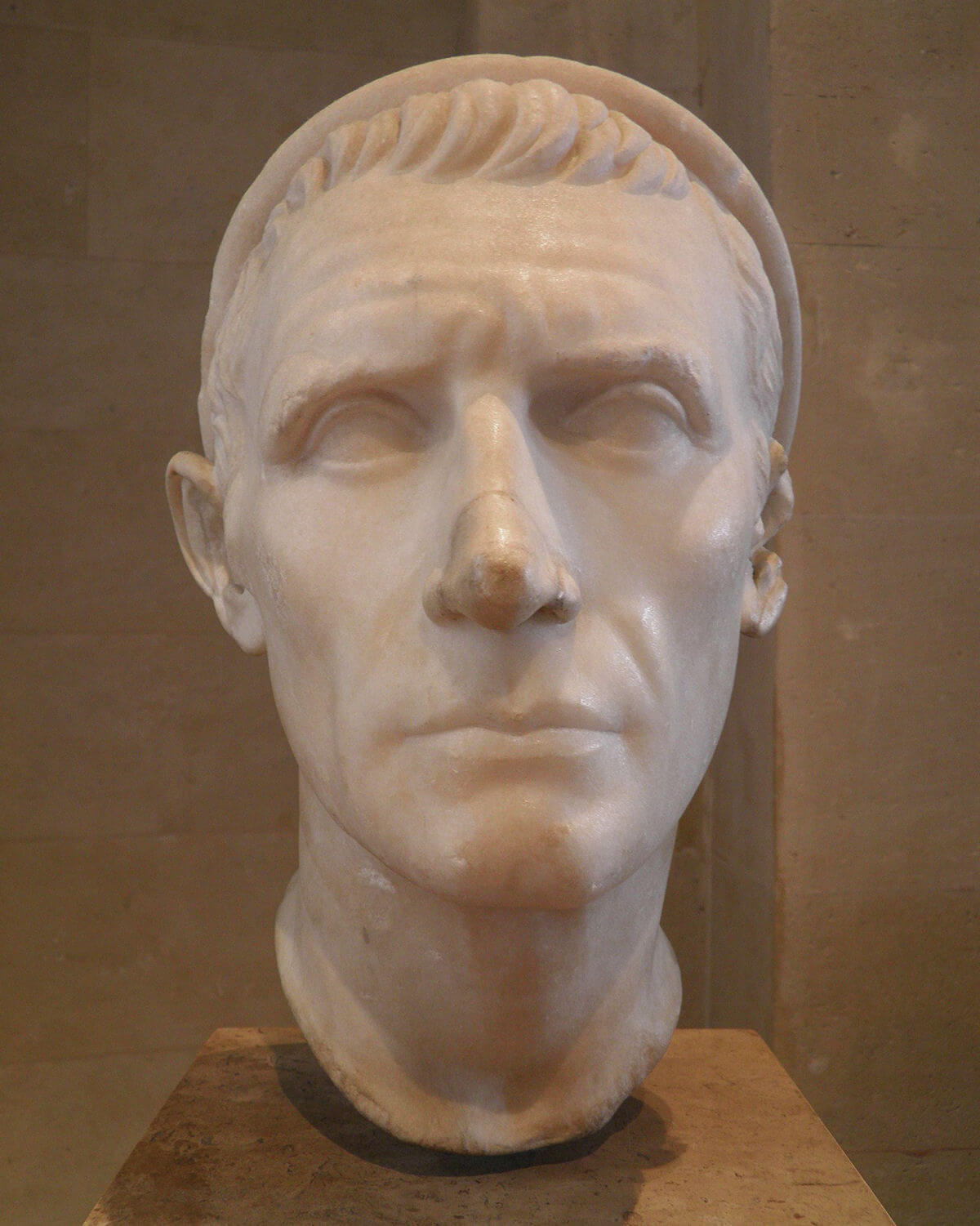
Carole Raddato from FRANKFURT, Germany, CC BY-SA 2.0, via Wikimedia Commons
A bust from the Louvre, possibly a Roman copy of a Hellenistic portrait of Antiochus III
The Romans demanded that Antiochus restore conquests at the cost of Ptolemy in Egypt back to Egypt, and not to interfere with Greek coastal cities. Anthiochus responded by suggesting the Romans had no more right to interfere in his Asian affairs then he had to interfere in Italy.
As seemed to be the custom in Roman diplomacy prior to wars of expansion, after a series of negotiations, little was resolved. War with Antiochus was inevitable, as the Romans looked to their east for further political influence and authority.
Over the next year, the political climate in Greece was unstabilized at best. Flamininus pressed upon the Greeks to authorize a war against Nabis of Sparta which, while resulting in an easy victory, increased regional wariness of Rome . As a result the Aetolians especially - a Roman ally against Philip V - were becoming unsettled with the spread of Roman influence in Greece.
Hannibal Barca, in exile from Carthage after his defeat in the Second Punic War, had joined the army of Antiochus as an admiral, and was certainly encouraging war against Rome. Antiochus continued to operate in Thrace, despite Roman assurances that they would not interfere in Asia provided that the Syrians left the mainland parts of Europe.
Eumenes, the King of Pergamum in western Asia Minor - and a Roman ally - meanwhile urged the Romans to act against Antiochus.
Obviously deeply involved in Greek affairs by this time, the Romans were drawn into a war with the now troublesome Aetolians. Influencing the Spartans to continue operating against the Achaean League in Greece, the Romans were forced to intervene again. The Aetolians now took action on their own and attempted to capture Sparta, Chalcis and Demetrias.
On the first two, Roman intervention stopped them, but at Demetrias, disgruntled Greeks let the Aetolians in. The Romans, so busy trying to keep the peace with several factions, failed to keep any of them happy.
The Aetolians then went to Antiochus and inspired him to invade Greece, as they convinced him that the Greeks were ready to be rid of the Roman yoke. It was at this time that the Romans were completing their withdrawal of forces back to Italy, and Antiochus crossed into Greece at Demetrias with a small force of 10,000 men.
While Antiochus may have thought that the Romans might be indifferent to his aggression, the exact opposite was the case. In 192 BC, they crossed from Italy into Epirus with two legions to oppose the Syrians. Antiochus also soon found out that Aetolian claims of Greek willingness to join him against Rome were far overstated. Aside from capturing a few towns near Demetrias, no Greeks willingly joined him. Soon after his crossing, the Achaean League declared war on Syria, and the stage was set for a showdown between the eastern and western powers.
By 191 BC, the Roman Consul Manius Acilius Glabrio took command of 20,000 Italians, along with a great many Greek and Illyrian allies. Soon after his arrival, Antiochus knew he had no chance in Greece as he was so vastly outnumbered, and withdrew to a favorable position. The Romans immediately took advantage of Antiochus' withdrawal and put an end to Aetolian aggression, taking control of Thessaly.
Antiochus, rather than retreating all the way back to Asia, chose instead to meet the Romans at a place where his numerical inferiority could be countered with the advantage of terrain.
Just as the Spartans had blocked the Persian advance at Thermopylae some 300 years before, Antiochus chose the sight to prevent a Roman advance into Asia. Vastly outnumbered, the plan was a complete folly, however, and Glabrio crushed the Seleucid army completely, while Antiochus himself fled to Ephesus in Asia Minor.
With this victory, the Romans now considered Greece - and even Asia - as part of their sphere of influence. In 190 BC, the brother of Scipio Africanus, Gnaeus, was elected Consul and given Asia Minor as his province. Scipio Africanus himself could not be Consul, under Republican law, as it had been less than 10 years since he last held that position. But Gnaeus' election, with the legendary Africanus as his chief Legate, was proof that the Romans meant business.
The Scipios first arranged for peace with the Aetolians, enabling them to carry the war to Antiochus with their rear secured. Without Syrian support, the Aetolians were all too happy to comply at this point and shed persistant Roman scrutiny. The Scipios then marched into Asia through Thracia and, by October, were ready to confront Antiochus.
In a precarious situation, the Syrians tried to offer terms of peace, but the Romans demanded the complete withdrawal of all forces from Asia Minor and reparations for all costs of the war to date. Both sides rejected the other's terms and Antiochus assembled a large, but poor quality, army to face Scipio.
At Magnesia in Ionia, 30,000 Romans and 70,000 Syrian and mercenary troops met for battle. The Romans quickly routed Antiochus' forces, and the Syrians had no choice but to withdraw from any previously won gains in the region.
Freshly negotiated terms afterward forced Antiochus to withdraw from Asia all the way to the Taurus Mountains, pay 15,000 talents in reparations, hand-over Hannibal to the Romans, and pay restitution to Eumenes of Pergamum.
As a result of Magnesia, Eumenes of Pergamum not only became the most powerful king in Asia, but Rome now spread its influence even deeper into the east, maintaining direct control of the Greek cities in the region, whereas the remaining territories were split between Pergamum and the Roman ally of Rhodes.
Punic Wars and Expansion - Table of Contents
- First Punic War
- Illyrian Wars
- Conquest of Cisalpine Gaul
- Second Punic War
- First Macedonian War
- Second Macedonian War
- Syrian War
- Third Macedonian War
- Fourth Macedonian War and the Achaean War
- Third Punic War
Did you know...
The Seleucid Empire emerged as one of the successor states of the Macedonian Empire following the death of Alexander the Great in 323 BC.


,_late_1st_century_BC%E2%80%93early_1st_century_AD,_Louvre_Museum_(7462828632).jpg)