

About Sardinia
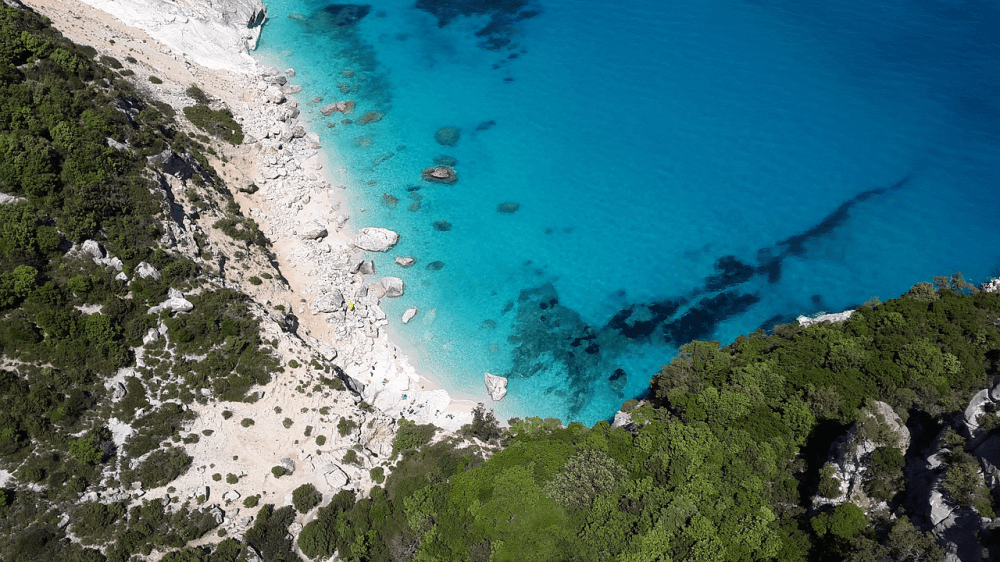
Sardinia is the second largest island in the Mediterranean. Sardinia is separated from Corsica to the north by the 6 mile (10 km) wide Strait of Bonifacio. The distance from the east coast of Sardinia to the Italian mainland is about 120 miles (193 km). The Island of Sardinia has a 1,100 mile (1,800 km) long jagged and rocky coastline, with many small streches of sandy beaches in between.
From the 8th century BC, the Phoenicians founded several cities and strongholds on Sardinia; Tharros, Bithia, Sulcis, Nora and Karalis (Cagliari). Sardinia had a special position because it was central in the western Mediterranean between Carthage, Spain, the Rhone river and the Etruscan civilization area.
The mining area around Iglesias was important for lead and zinc, and the cities were founded on strategic points, often peninsulas or islands near estuaries, which were easier to defend and provided natural harbours. After the Phoenicians, the Punics (from Carthage) took over control in that part of the Mediterranean, around the 550 BC. The Punics expanded their influence in almost the whole of Sardinia.
In 238 BC, the Romans took over the island and Sardinia became a province of the Roman empire.
Sardinia Facts and Figures
- Official Name: Sardinia (Sardegna)
- Land Area: 9,302 sq miles (24,092 sq km)
- Population: 1,680,000
- Capital: Cagliari (population 160,000)
Weather in Sardinia
The island has a warm temperate marine climate. The weather is very hot and dry in summer, and mild and humid during winter times. The heat of summer is however refreshed by the frequent Mistral wind.
In Sardinia, it usually does not rain very often. Rain falls more frequently in the middle of the island and less along the coast and the Campidano Plain.
Sights and Historical Buildings in Sardinia
Sardinia is full of Roman and Punic remains, just waiting for tourists to discover them. There are the fortresses of Monte Sirai and Pani Loriga built by the Carthaginians, and the major Punic cities of Tharros, Nora and Sulci.
In Cagliari, an impressive Roman amphitheatre can be found, as well as the temple of Antas near Fluminimaggiore, just to name a few.
Almost everywhere on the island of Sardinia, one stumbles upon traces of the ancient Roman age.
How to get to Sardinia
To Sardinia by Air
There are three airports on Sardinia: Cagliari-Elmas the largest, Olbia-Costa Smeralda and the very small Alghero-Fertilia. Considering the island's overall size, three airports keep it well connected to the European mainland for tourists.
Sardinia is connected to the major Italian and European airports by airlines such as Meridiana, Alitalia, Volare and Air One. Ryanair offers a direct flight from London to Alghero's Fertilia airport.
Cagliari Airport
The largest airport in Sardinia. Official name is L'Aeroporto di Cagliari Elmas (CAG). The airport is about 4 miles (6 km) away from the city center. The airport in Cagliari has about 300 parking spaces, and there are permanently stationed taxis available. A shuttle (bus) departs every hour to the city center.
Many major rental car companies like Budget, Hertz and Eurocar operate at Cagliari Airport. The largest Airline that frequently arrives in Cagliari is Alitalia.
Olbia-Costa Smeralda Airport
The second largest airport in Sardinia. Official name is Aeroporto di Olbia-Costa Smeralda (OLB). The airport is only 2 miles (3 km) away from the city center. The airport in Olbia has plenty of parking spaces, and there are several taxis operating at the airport. There is also a shuttle bus available which takes about 10 minutes to get to town.
Several major rental car companies like Avis, Hertz and Sixt operate at Olbia Airport. The are several airlines that fly into Olbia (Meridiana, Easyjet, HLX and Helvetic).
To Sardinia by Sea
Several ferries and ships connect Sardinia with the main Italian and European ports. Cagliari, Olbia, Porto Torres, Arbatax-Tortol and Golfo Aranci are the main ports in Sardinia. The Sardinia Ferries, Tirrenia, and the Moby lines have regular trips to and from Sardinia.
Sardinia Travel Videos
As with Sicily, it is hard to find excellent travel videos that feature Sardinia exclusively, as most videos about Sardinia are generally videos about Italy and have only a section for Sardinia.
We tried hard to collect the most popular travel videos about Sardinia (of course most are also available on DVD) and hope we have succeeded with it.
It is also important to look out for the right version of the travel videos; often travel DVD's from the USA do not work in Europe and Asia and vice versa.
Below you will find a selection of Sardinia travel videos. We hope you find them as useful as we think they are.
Travel Videos About Sardinia
- Globe Trekker - Corsica, Sicily & Sardinia - The Mediterranean islands of Corsica, Sardinia and Sicily are the stepping stones between Europe and Africa. A mix of Italian, French and Moorish traditions, visitors have long been attracted to the contrasting cultures and scenery of these three Mediterranean Islands.
- Exploring Horizons Land of the Giants - San Teadoro Sardinia, Italy - This show uncovers the essence of this unique island life: along the muraled walls in the politically charged town of Orgosolo, amidst the giant tombs of ancient Nuraghe ruins, beneath the surface of the wild Bosa coast and on the bustling beaches of San Teodoro.
- Hippy Gourmet - Travels to Sardegna, Italy at Hotel and Spa Capo D'Orso! - Arriving on stunning Sardegna (Sardinia), we made our way to the absolutely stunning hotel and resort Capo D'Orso! Built into the side of a gently sloping hill that leads to pristine beaches and coastal access, Capo D'Orso offers some of the most captivating views and scenery on Sardegna!
Sardinia Travel Maps
When travelling abroad, wise travellers inform themselves upfront about their destination. Online maps for the destination of your choice is a great way to get the basic facts, but obviously a computer with online connection won't always be available when you travel. It is essential to have a map of the region actually in your hands. Don't forget!
Trains on Sardinia connect the whole island but are rather slow; some run on narrow gauge track. Many tourists catch the trenino verde which runs through the wildest parts of the island. It is slow but it allows the traveller to enjoy scenic views that are impossible to see from the main road. The train connects Cagliari to Arbatax in the south and Sassari to Palau in the north. It's highly recommended to make the trip from Macomer to Bosa Marina, where the train winds its way through the typical Sardinian landscape to reach the sea near the coastal town of Bosa situated in the west of the island.
When to Buy Travel Maps
Make sure you order with plenty of time to spare in advance of your trip. Even though shipping is generally fast in the modern world, waiting too long to order could be a problem as glitches can occur. You'd rather have the travel map in your hands a bit earlier than risk not having one at all on departure.
Travel Maps for Your Holiday in Sardinia
- Sardinia [Italy] (National Geographic Adventure Map, 3309) - Waterproof and tear-resistant, National Geographic's Sardinia Adventure Map is designed to meet the unique needs of adventure travelers with its durability and accurate information.
- Michelin Local Road Map 366: Sardegna (Sardinia, Italy) - The clear, clean and uncluttered style of Michelin maps is compounded with extreme attention to detail covering scenic roads, footpaths, panoramic views, emergency telephones, road widths and more.
- Sardinia Marco Polo Map - Marco Polo maps feature completely up-to-date, digitally generated mapping. A fold-out overview map is ideal for route planning and 7 self-adhesive Marco Polo mark-it stickers can be used to pin-point a destination or route for future reference.
- Sardinia Travel Map (with Cagliari) - A detailed two-sided road and tourist map of the island of Sardinia, Italy at a scale of 1:150,000 (1"to 2.4 miles) by Freytag-Berndt.
Books About Sardinia
There are plenty of wonderful books about Sardinia, however, there is not one perfect book to review everything about Sardinia! Therefore one has to carefully select the topic one would like to research/read about the beautiful Mediterranean island.
There are excellent books about the recent history of Sardinia like Sea and Sardinia by D. H. Lawrence, fantastic books about the early history of Sardinia like A Prehistory of Sardinia: 2300-500 BC by Gary Webster, or even books about food from the island like Foods of Sicily and Sardinia and the Smaller Islands by Giuliano Bugialli.
When you buy books about Sardinia, make sure the book is specifically about the island of Sardinia, or at least it is the "main theme" of a broader subject. There is nothing more irritating than to buy a book about a specific region but you just get an overview instead of in-depth information regarding the subject of your choice.
Make sure that you buy a book that's not too old (published date) because the travel information could be outdated. If possible, buy a book that has many of pictures of the island. After all, you would like to see as much of the place you are going to as you can to help you plan your trip. We collected the (in our opinion) best travel books about Sardinia available. We hope you find the selection useful. Happy reading!
Sardinia Travel Books
- The Rough Guide to Sardinia - 264 pages. Shows travelers how to explore the unique land and culture of Sardinia. Includes a giant full-color foldout map. Designed for independent and adventurous travellers.
- Lonely Planet Sardinia (Travel Guide) - 272 pages. Nobody knows Sardinia like Lonely Planet. Whether you're hunting for the perfect rural retreat, the tastiest seafood or the fairest beach.
- Footprint Sardinia: With Popout Map (Footprint Destination Guides) - 288 pages. Covers the capital Cagliari and the south, Ostriano and the west, including Terralba and Cabra, Sassaari and the north, Gallura and the Costa Smeralda and the Nuoro and Ogliastra provinces and Barbagie.
- Walking in Sardinia: 50 Walks in Sardinia's Mountains (Cicerone Guides) - 192 pages. New Paddy Dillon guide to 50 day walks in the mountainous north east of Sardinia, in the Mediterranean off the coast of Italy. Includes a mixture of classic and little-known routes for all abilities.
- Sardinia: Alghero & the North Footprint Focus Guide: Includes Costa Smerelda - 128 pages. Jam-packed with information on this fascinating destination, Footprintfocus Sardinia: Alghero and the North will guide you around all the best sights and sounds.
